The ship is still part of the memorial landscape
Why USS Utah feels different from every other Pearl Harbor site
The USS Utah Memorial stands apart from Pearl Harbor’s more frequently visited attractions. There is no large museum, preserved interior or public boat running continuously through the day. Instead, a modest white memorial reaches toward the water beside the rusted remains of Utah, still lying where the ship capsized on December 7, 1941. The visible wreck makes the boundary between historic object, grave and memorial especially direct.
Utah had begun life as a Florida-class battleship, but by 1941 it served as a target and training ship designated AG-16. Its decks carried timber used during aerial target practice, contributing to confusion among attacking pilots. Torpedoes struck early in the raid, and the ship rolled over quickly on the western side of Ford Island. Fifty-eight crew members died. Attempts to move the wreck did not succeed, and Utah was left in place.
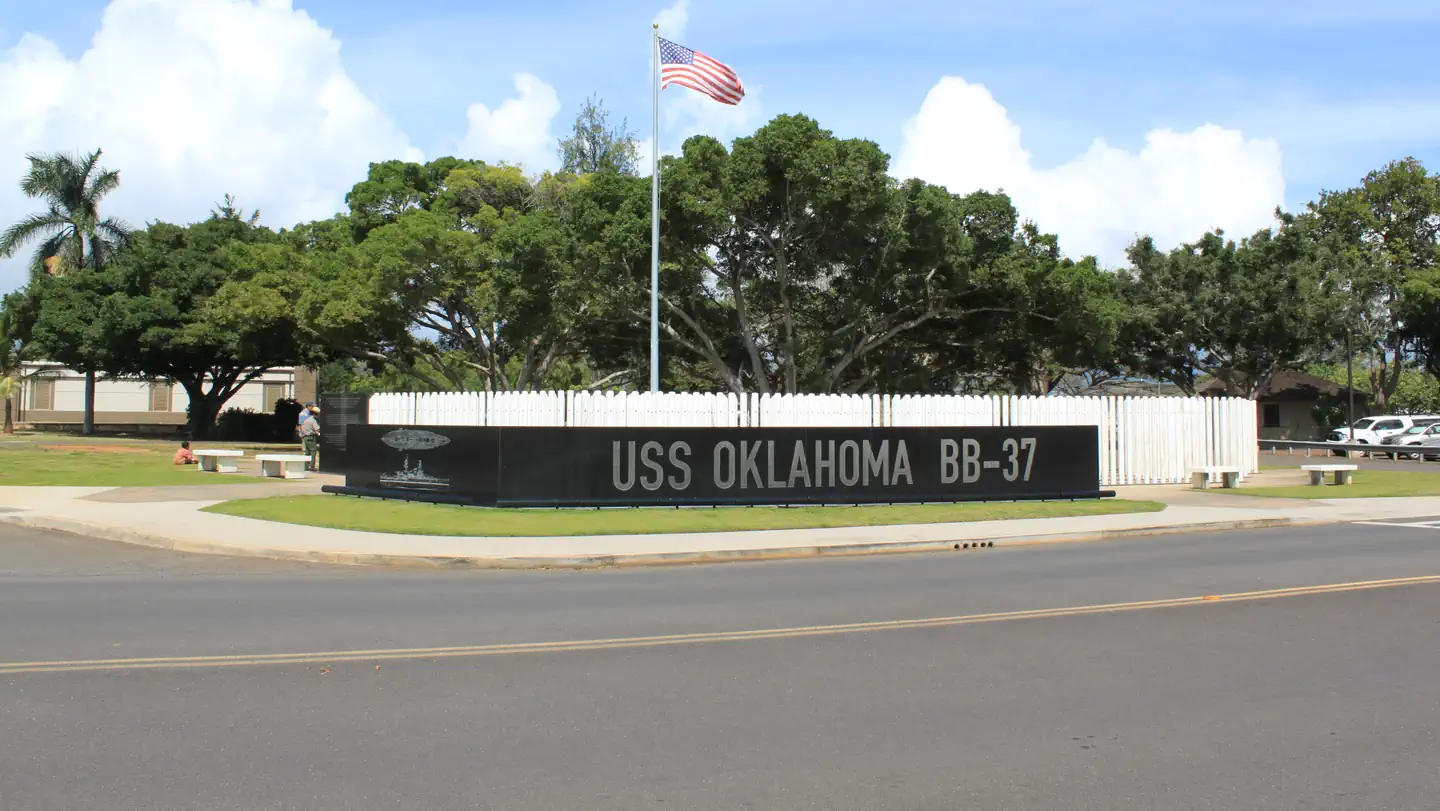
The memorial is on an active military base, in an area that ordinary visitors cannot enter independently. Current National Park Service guidance says visitors without an Active-Duty Military ID must reserve the ranger-led Ford Island Bus Tour through Recreation.gov. The program also visits the USS Oklahoma Memorial and provides historical context during an escorted route from the Pearl Harbor Visitor Center.
That limited access is not an inconvenience to solve through an unofficial shortcut. It is a defining condition of the visit. Reservations, security, identification, timing and group movement must all be treated seriously. For travelers who cannot secure a place, the NPS-supported 3D virtual experience offers a meaningful alternative with views above and below the water and historical interpretation.