History

Pearl Harbor, located on the south shore of Oahu in Hawaii, is one of the most historically significant sites in the United States. While many people immediately associate it with the devastating attack of December 7, 1941, its story stretches much further back in time and continues long after World War II. From its early days as a rich Hawaiian fishing ground to its role as a U.S. naval stronghold, and today as a place of remembrance, Pearl Harbor has been at the center of both local culture and global history.

Pearl Harbor Before Western Contact

Long before foreign powers ever set eyes on the sheltered lagoon, Native Hawaiians thrived along its shores. They called the area Wai Momi, meaning “Waters of Pearl,” because of the pearl-bearing oysters that flourished there. The harbor provided a rich food source, from fish and shellfish to seaweed, and it was closely tied to the traditions and daily life of Hawaiian communities.

Pearl Harbor was not just an economic resource. In Hawaiian culture, bodies of water often carried deep spiritual meaning. Its fishponds and estuaries were carefully managed using sophisticated aquaculture techniques, reflecting the sustainable practices of the Hawaiian people. The land and sea were seen as interconnected, and Pearl Harbor fit into a broader system of resource management known as the ahupuaʻa, which divided land from mountain to sea to ensure balance and abundance.

First Encounters With the West

The first recorded Western contact with Pearl Harbor came in the late 18th century, following Captain James Cook’s arrival in Hawaii. Over the next decades, foreign ships recognized its deep anchorage, though the narrow and shallow entrance limited its use. By the early 19th century, missionaries, traders, and whalers had established a growing presence on Oʻahu, and foreign powers began to eye the harbor for its military potential.

For Native Hawaiians, these developments brought dramatic change. New diseases, cultural shifts, and political pressures disrupted traditional life, setting the stage for Hawaii’s eventual transformation under U.S. influence.

The Kingdom of Hawaii and U.S. Interest

In 1841, King Kamehameha III commissioned a survey of Pearl Harbor, recognizing its potential as a harbor for larger ships. Still, it remained relatively undeveloped through much of the 19th century because of the coral reef that made access difficult.

By the 1870s, the United States had become Hawaii’s most important trading partner, particularly through the sugar industry. In 1887, under pressure from the United States, the Kingdom of Hawaii granted America exclusive rights to use Pearl Harbor as a coaling and repair station for its naval ships. This agreement marked the beginning of a permanent U.S. military presence in Hawaii.

Annexation of Hawaii and Naval Expansion

In 1893, a group of American and European settlers, with the backing of U.S. Marines, overthrew Queen Liliʻuokalani, ending the Hawaiian monarchy. Just five years later, in 1898, Hawaii was formally annexed by the United States during the Spanish-American War, when America’s strategic interest in the Pacific became undeniable.

Pearl Harbor quickly grew in importance as the headquarters for the U.S. Pacific Fleet. The coral reef was dredged to create a navigable channel, and by the early 20th century, dry docks, shipyards, and defensive fortifications had transformed the quiet lagoon into a bustling naval base.

Rising Tensions in the Pacific

During the 1930s, Japan pursued aggressive military expansion throughout East Asia, invading Manchuria in 1931 and launching a full-scale war with China in 1937. The United States, committed to protecting its interests in the Pacific, grew increasingly concerned about Japan’s ambitions.

When Japan pushed further into Southeast Asia in 1940, the U.S. responded by freezing Japanese assets and placing embargoes on essential exports, including oil and steel. These sanctions threatened Japan’s ability to sustain its war machine. Japanese leaders began planning to secure vital resources in the Dutch East Indies and Southeast Asia – but to do so, they needed to neutralize the U.S. Pacific Fleet at Pearl Harbor.

The Attack on Pearl Harbor

The Morning of December 7, 1941

At 7:55 a.m. on Sunday, December 7, 1941, Japanese aircraft swept over Oʻahu in a surprise assault that would change the course of world history. More than 350 planes launched from six aircraft carriers targeted airfields, battleships, and military installations across the island.

The attack unfolded in two waves:

  • The first wave focused on battleships moored along “Battleship Row.”
  • The second wave expanded to airfields and other naval vessels, seeking to cripple America’s defensive and offensive capabilities.

Human and Material Losses

The results were catastrophic:

  • Casualties: Over 2,400 Americans were killed and about 1,200 wounded.
  • Naval losses: Eight battleships were damaged, four of them sunk. The USS Arizona exploded after a bomb struck its forward magazines, killing 1,177 crew members. The USS Oklahoma capsized, trapping and killing 429 sailors.
  • Aircraft: Nearly 200 U.S. planes were destroyed.

Despite the devastation, some crucial assets were spared. The Pacific Fleet’s aircraft carriers were out at sea during the attack, and the base’s fuel storage facilities remained intact – factors that proved vital for the U.S. war effort.

“A Date Which Will Live in Infamy”

The very next day, President Franklin D. Roosevelt addressed Congress, declaring December 7th “a date which will live in infamy.” The United States formally declared war on Japan, thrusting the nation into World War II. Just days later, Germany and Italy declared war on the United States, making the conflict truly global.

For ordinary Americans, Pearl Harbor was a turning point. The attack shocked the public and ended years of isolationist sentiment. Men and women enlisted in the armed forces in record numbers, and industries across the country mobilized to support the war effort.

Pearl Harbor During World War II

After the attack, Pearl Harbor remained the hub of U.S. naval operations in the Pacific. Remarkably, many of the damaged ships were salvaged, repaired, and returned to service. The USS West Virginia, USS California, and even the capsized USS Oklahoma were refloated, though the Oklahoma never returned to battle.

From Pearl Harbor, U.S. forces launched campaigns across the Pacific, from the Battle of Midway in 1942 to the long island-hopping strategy that pushed back Japanese forces. By the war’s end, Pearl Harbor had transformed from the site of America’s greatest military defeat to the springboard of its ultimate victory.

The End of the War and the USS Missouri

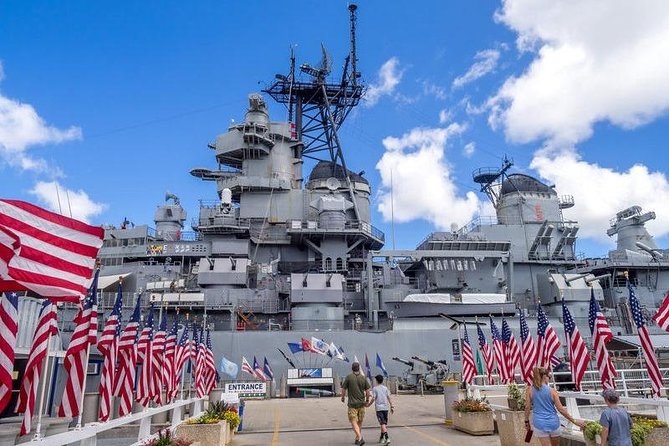
The war in the Pacific concluded on September 2, 1945, aboard the USS Missouri, anchored in Tokyo Bay. It was on the deck of this battleship – today permanently moored at Pearl Harbor – that Japan formally surrendered, bringing World War II to a close. The juxtaposition is striking: within four years, the same harbor that symbolized devastation became the stage for triumph and peace.

Post-War Years and Cold War Significance

After World War II, Pearl Harbor remained a critical U.S. military base. During the Cold War, it served as the headquarters of the Pacific Command, playing a central role in American strategy in Asia. It supported U.S. operations in the Korean War, the Vietnam War, and beyond.

Even today, Joint Base Pearl Harbor-Hickam continues to host the U.S. Pacific Fleet, underscoring the harbor’s enduring strategic importance.

Pearl Harbor Memorials and Museums

Recognizing the historical and emotional weight of December 7, 1941, the United States has preserved Pearl Harbor as a place of memory and education. Visitors today can explore multiple sites that honor those who served and died:

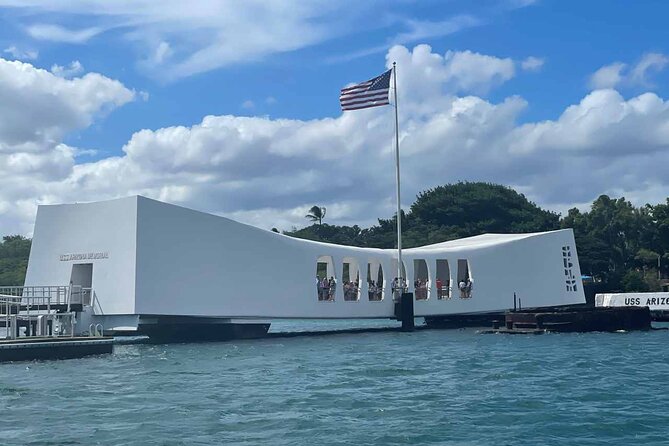
  • USS Arizona Memorial: Built directly above the sunken battleship, it marks the final resting place of over 1,100 crew members. Accessible only by boat, the white memorial structure stands as a solemn reminder of sacrifice.
  • USS Oklahoma Memorial: Located on Ford Island, this memorial features white marble standards symbolizing each of the 429 sailors and Marines lost.
  • USS Utah Memorial: Less visited but deeply moving, it commemorates the 58 men who died when the ship capsized.
  • Battleship Missouri Memorial: The “Mighty Mo” represents victory, as the site of Japan’s surrender. Walking its decks offers a powerful connection to the end of the war.
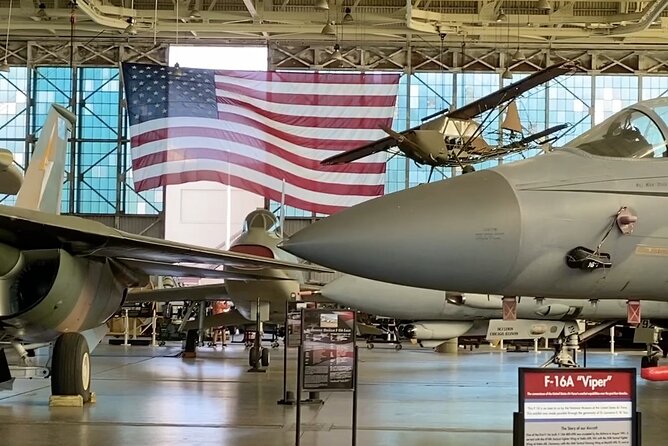
  • Pearl Harbor Aviation Museum: Housed in historic hangars that survived the attack, it showcases aircraft and stories from the Pacific air war.
  • USS Bowfin Submarine Museum & Park: Nicknamed the “Pearl Harbor Avenger,” the Bowfin launched within a year of the attack and went on to serve nine successful war patrols.

Legacy and Lessons of Pearl Harbor

The history of Pearl Harbor offers many lessons. It is a story of vulnerability and resilience, of loss and recovery. For Hawaii, it represents both the deep scars of war and the continued presence of the U.S. military on its shores. For the United States, it symbolizes the cost of unpreparedness but also the unity and determination that followed.

The attack also reshaped global history. It drew the United States into World War II, accelerating the defeat of fascism in Europe and militarism in Asia. The war, in turn, set the stage for the modern world order, the United Nations, and the long Cold War rivalry between the United States and the Soviet Union.

Visiting Pearl Harbor Today

Today, Pearl Harbor is part of the World War II Valor in the Pacific National Monument, managed by the National Park Service in partnership with non-profit organizations. Millions of visitors come each year to pay their respects and learn about the past.

A visit typically begins at the Pearl Harbor Visitor Center, which includes two free museums, a documentary film, and exhibits explaining the attack and its aftermath. Tickets are required for the boat ride to the USS Arizona Memorial, and additional tours are available for the other historic sites on Ford Island.

For many visitors, walking the grounds and seeing the oil that still leaks from the USS Arizona – often called the “tears of the Arizona” creates a profound and lasting memory.