Why the Mighty Mo is essential
A battleship that carries the story beyond December 7
The Battleship Missouri Memorial is best known as the site where representatives of Japan signed the Instrument of Surrender on September 2, 1945, formally ending World War II. Standing on the Surrender Deck gives visitors a direct physical connection to that moment, with historical markers explaining who stood where and how the ceremony unfolded.
Yet the ship is larger than a single event. USS Missouri served in World War II, the Korean War and the 1991 Gulf War before being decommissioned for the final time in 1992. Its enormous guns, command spaces, crew areas and long service history show how battleships evolved from symbols of industrial power into complex platforms operating across several generations of naval warfare.
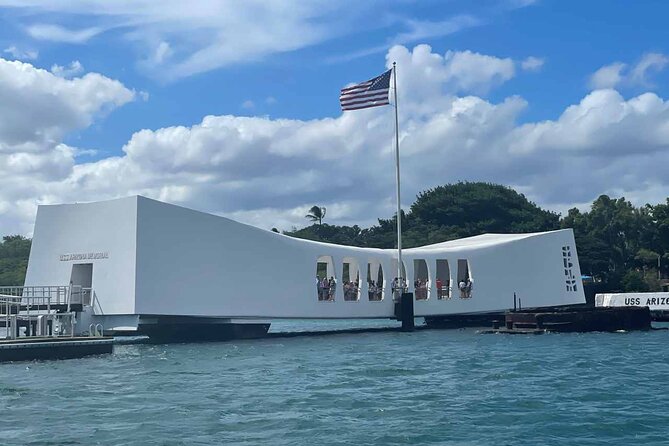
The memorial’s location on Ford Island adds another layer. Missouri faces the USS Arizona Memorial across the harbor. The two ships are often described as bookends to the United States’ involvement in World War II: Arizona represents the lives lost during the attack that brought the country into the conflict, while Missouri preserves the place where the war formally concluded.
This is a paid attraction on an active military base. Most civilian visitors cannot drive directly to it and must use the complimentary shuttle from the Pearl Harbor Visitor Center. That transfer is straightforward, but it changes the rhythm of the day. You need to allow for the outbound ride, security rules and the return shuttle rather than treating the ship like a roadside museum.
Who should prioritize Missouri?
Choose it if you want one large, immersive historic vessel; if the surrender story is central to your interests; or if you have time for only one paid partner site after the USS Arizona Memorial. The main deck and included tour are approachable, while additional decks reward visitors who are comfortable with stairs, ladders and a longer physical visit.